The most consequential decision in any construction project is not the design. It is the contractor. Choose well and the project runs with confidence. Choose poorly and every other decision — no matter how good — gets undermined by the one that came first.
Why Price is the Wrong Starting Point
Delhi NCR has hundreds of civil contractors ranging from sole proprietors with a JCB to mid-sized firms with 500-person workforces to large integrated contractors capable of managing ₹500Cr projects. The bottom quartile will always underbid — because they have to. They compensate later through variations, material substitutions, and timeline extensions. The lowest bid is rarely the lowest cost.
The mechanism is consistent: an underbid contractor locks in the project, then recovers margin through variations on ambiguous scope items, material upgrades they present as necessary, and delay claims they attribute to client decisions. By the time the pattern becomes clear, the client is contractually committed, partially constructed, and facing the choice between paying up or the catastrophic disruption of changing contractors mid-project.
A systematic contractor evaluation starts with capability, not price. Price comes last — applied only to contractors who have already qualified on every other dimension. Among qualified contractors, price differences are usually modest. Among all tendering contractors, price differences mean nothing — because the cheapest tender is optimistically priced by someone who needs the project more than they can deliver it.
The Seven Dimensions of Contractor Evaluation
1. Reference depth — Not names, but conversations. Call the client from their last three comparable projects. Ask specifically: were there surprises, how were they handled, would you use them again? A contractor with real confidence will hand you the phone number without hesitation.
2. Site safety record — Ask for their incident rate over the last three years. Ask for their LTIFR (Lost Time Injury Frequency Rate). A contractor who cannot answer this question does not track it. A contractor who does not track it does not have a safety culture. Safety culture and quality culture are the same culture — they cannot be separated.
3. Equipment ownership vs rental — Ask for a list of major plant owned outright. Cranes, concrete pumps, batching plant, compaction equipment. A contractor who owns their critical plant controls their own programme. A contractor who rents it is dependent on third-party availability at the worst possible moments.
4. In-house testing capability — Do they have an on-site lab with calibrated equipment? Can they conduct concrete cube tests, slump tests, compaction tests, and rebar tensile tests without sending samples off-site for three days? On-site testing means problems are caught and corrected in real time, not discovered a week after the concrete has cured.
5. Team depth — Who is the project manager, and who backs them up? What is the succession plan if the project manager leaves mid-project? A large project should have at minimum a project director, a resident engineer, a quality manager, and a safety officer — each with defined responsibilities and the experience to discharge them.
6. Subcontractor management — How do they select, supervise, and pay subcontractors? Ask for their subcontractor payment track record. Delayed subcontractor payments cause site walk-offs that are your problem, not theirs. A contractor who treats their subcontractors well has a supply chain that shows up.
7. Financial stability — A contractor managing cash flow problems on site will cut corners. This is not malicious — it is the arithmetic of survival under pressure. Ask for their last two years of audited accounts. Ask for a banker's reference. A financially stable contractor makes decisions on merit. A financially stressed one makes decisions on necessity.
The Site Visit Protocol
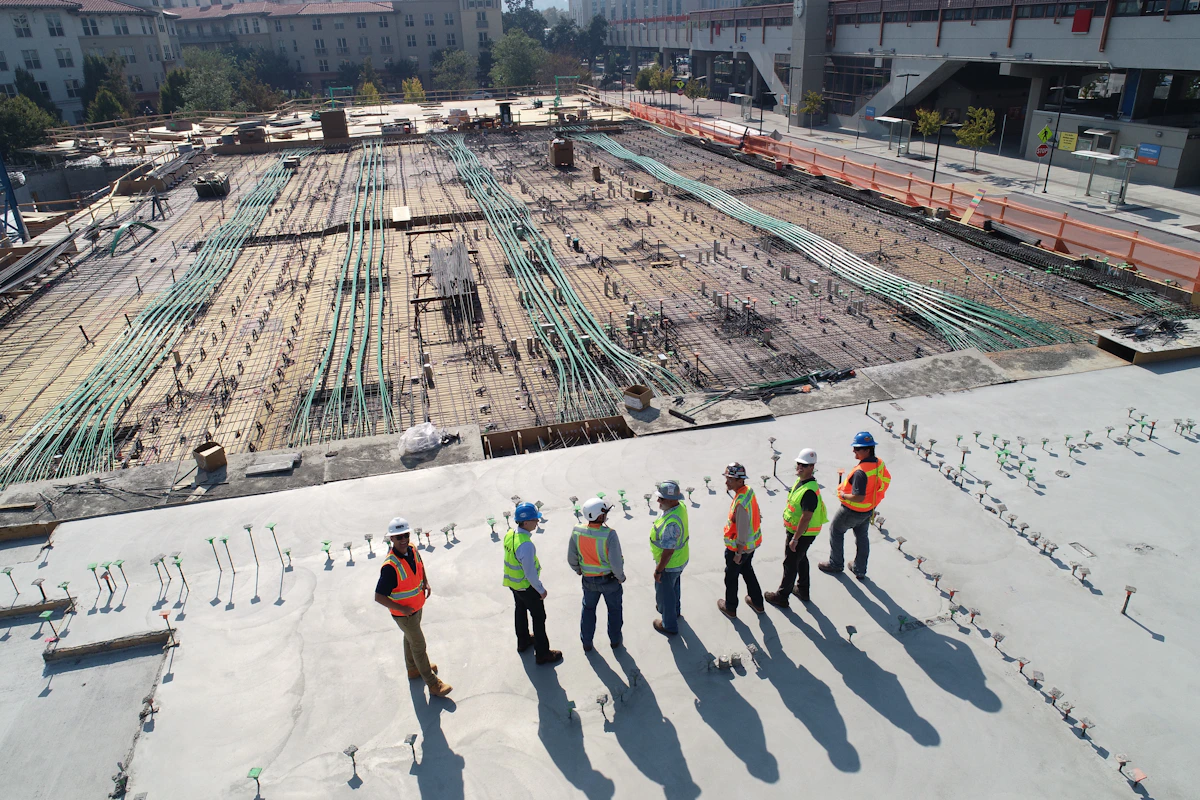
Visit an active project. Unannounced if possible — or at least without a guided tour. Walk the site and look at: Are workers wearing PPE? Are drawings accessible at the point of work? Is the site clean and organised, or chaotic and dangerous? How does the supervisor interact with workers — with authority and clarity, or with confusion? Is concrete curing properly protected? Are material deliveries documented?
The site visit takes two hours. It is the single highest-return investment in contractor evaluation. What you see on an active project is what you will get on your project. A chaotic site under an experienced team is still a chaotic site. A well-run site under a methodical team is a preview of what your project will feel like.
The Right Process, Start to Finish
Shortlist three to five contractors on capability criteria alone. Conduct site visits to active projects. Ask for a methodology statement specific to your project — not a template with your name on it. Request direct references and call them. Only then issue your bid document to the shortlisted contractors. Evaluate price among the shortlist. Appoint the contractor whose capability gives you the most confidence at a price you can justify.
This process takes longer. It costs more in pre-contract effort. It reliably produces better outcomes — because you are choosing a partner whose capabilities you have verified, not a name on a bid submission whose promises you have never tested.
Every hour spent in rigorous pre-contract evaluation saves ten on site. The contractor you appoint on the basis of thorough capability assessment will still surprise you occasionally — construction is inherently uncertain. But the surprises will be manageable, communication will be clear, and the response will be professional. That is the best anyone can promise. It is also what distinguishes the right contractor from a merely good one.