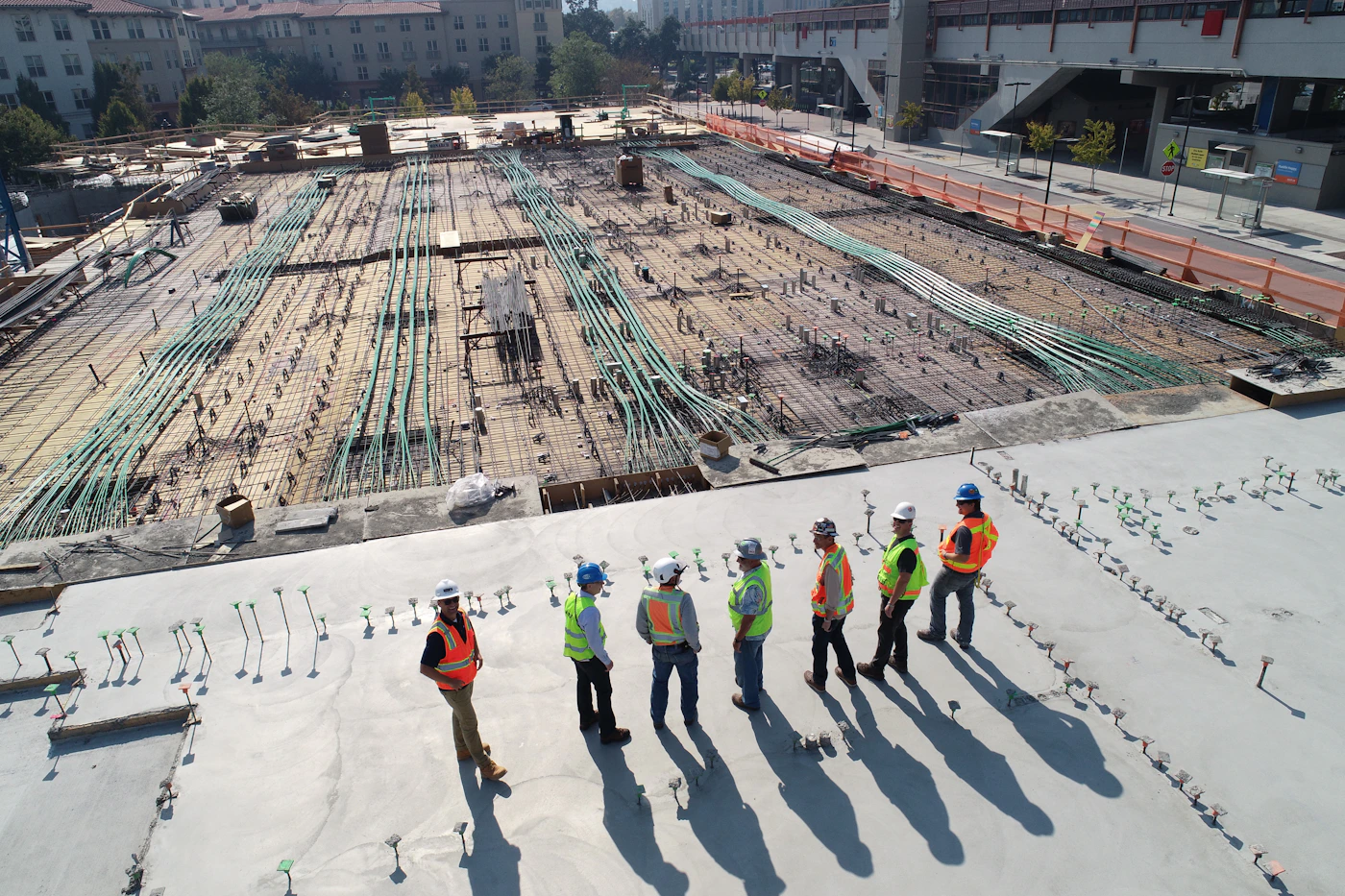
The budget overrun does not happen at handover. It happens at design stage — in the decision to not get a preliminary cost estimate before finalising a specification, in the assumption that the structural engineer and the MEP engineer are working to the same ceiling height, in the belief that value engineering is something you do at the end. By the time you reach site, the overrun is already baked in.
Why Cost Management Starts Before the Drawings
Most clients think of cost management as something that happens during construction — approving variations, reviewing payment certificates, managing contingency. This is the tail end of cost management. By the time you are managing costs on site, you have already made 90% of the decisions that determine what the project will cost.
The fundamental principle of construction cost management is that cost influence decreases as a project progresses. At concept stage you can change anything. At schematic you can change most things economically. At design development you can still make changes, but they cost more. At tender, significant changes are expensive. On site, changes are very expensive. At handover, change is catastrophic.
Cost management is therefore a front-loaded discipline. The investment of time and rigour at the early stages — when changes cost only drawing revisions — is what prevents the variation claims and budget overruns that appear to happen on site but were actually determined months earlier.

Stage 1: Concept Estimate
Before a single drawing is produced, you need a cost-per-square-foot benchmark for the project type. This is not a precise number — it is a sanity check. Does the client's budget align with the project brief? If a 50,000 sqft commercial building is budgeted at ₹800 per sqft and the market rate for the specification level intended is ₹1,400, that misalignment must be resolved now — not at tender.
The concept estimate is built from comparable project data, adjusted for location, specification level, site constraints, and current market conditions. It should include a contingency of 15–20% at this stage, reducing as the design develops and certainty increases. It is the first and most important sanity check in the entire cost management process.
Stage 2: Schematic Estimate
Once schematic drawings exist, a proper elemental cost plan is possible. Substructure, superstructure, envelope, services, finishes — each element gets a budget allocation. This is also when specification decisions carry the most cost leverage: changing a façade system at schematic stage costs a drawing revision. Changing it post-tender costs a variation and potentially a programme extension.
The schematic cost plan should be reviewed by the full design team — not just the architect. The structural engineer's scheme has cost implications for the MEP routing. The MEP engineer's requirements have implications for ceiling heights and structural penetrations. Reviewing costs without reviewing the coordination assumptions that underlie them is an exercise in false precision.
Stage 3: Design Development Estimate
As drawings develop to 60–70% completion, the estimate tightens significantly. MEP is now coordinated; structural sizes are confirmed; finishes are specified. Any variance from the Stage 2 budget is flagged explicitly, and the design team makes conscious decisions — accept the cost, reduce the scope, or find an alternative specification that meets the design intent within budget.
This is the last point at which design changes are genuinely economical. It is also the stage where value engineering should happen — not as a cost-cutting exercise at the end, but as a systematic review of whether every element is delivering value commensurate with its cost. Good value engineering at Stage 3 does not compromise the design. It sharpens it.

Stage 4: Tender Analysis
When bids arrive, the cost plan becomes your audit tool. A bid that is 25% below your estimate is not a saving — it is an unresolved question. Where has the contractor cut? Material specification? Labour allowance? Provisional sums they intend to claim back later as variations? Tender analysis means understanding the composition of the bids, not just their total.
A thorough tender analysis reviews the bill of quantities line by line, comparing rates against market benchmarks and against the cost plan assumptions. It identifies pricing anomalies — unusually low rates in early stages that will generate cash flow problems, unusually high rates in provisional items that anticipate variation opportunities. These are not errors. They are commercial strategies. Understanding them before contract award is far better than discovering them after.
Stage 5: Post-Contract Cost Control
Once construction begins, the discipline shifts to variation management. Every variation — instructed or claimed — is assessed against the approved budget before authorisation. A contingency fund (typically 7–10% of contract value) is maintained and drawn only with written justification and cost plan impact assessment. Monthly cost reports track committed, certified, and forecast final cost.
The monthly cost report is the most important financial document on any project. It should show three numbers: budget, forecast final cost, and variance. If those three numbers are present, the client knows exactly where they stand. If they are not — or if the contractor cannot produce them — the client is flying blind on a project where every month of delay and every rupee of overrun is entirely foreseeable in retrospect.
The Discipline That Separates Controlled Projects
Construction cost management is not complicated. It is disciplined. It requires doing the same rigorous analysis at every stage, flagging variances immediately rather than hoping they will resolve, and making conscious decisions about scope and specification rather than discovering the implications at tender. The projects that stay on budget are not the ones where nothing went wrong. They are the ones where the cost management discipline was strong enough to absorb the inevitable surprises without losing control of the outcome.