There is a moment in almost every multi-contractor construction project when no one is responsible for anything. Civil blames design. MEP blames civil. The client calls a meeting. Nothing moves. This is not a failure of individual contractors — it is a failure of the model itself.
The Anatomy of a Coordination Failure
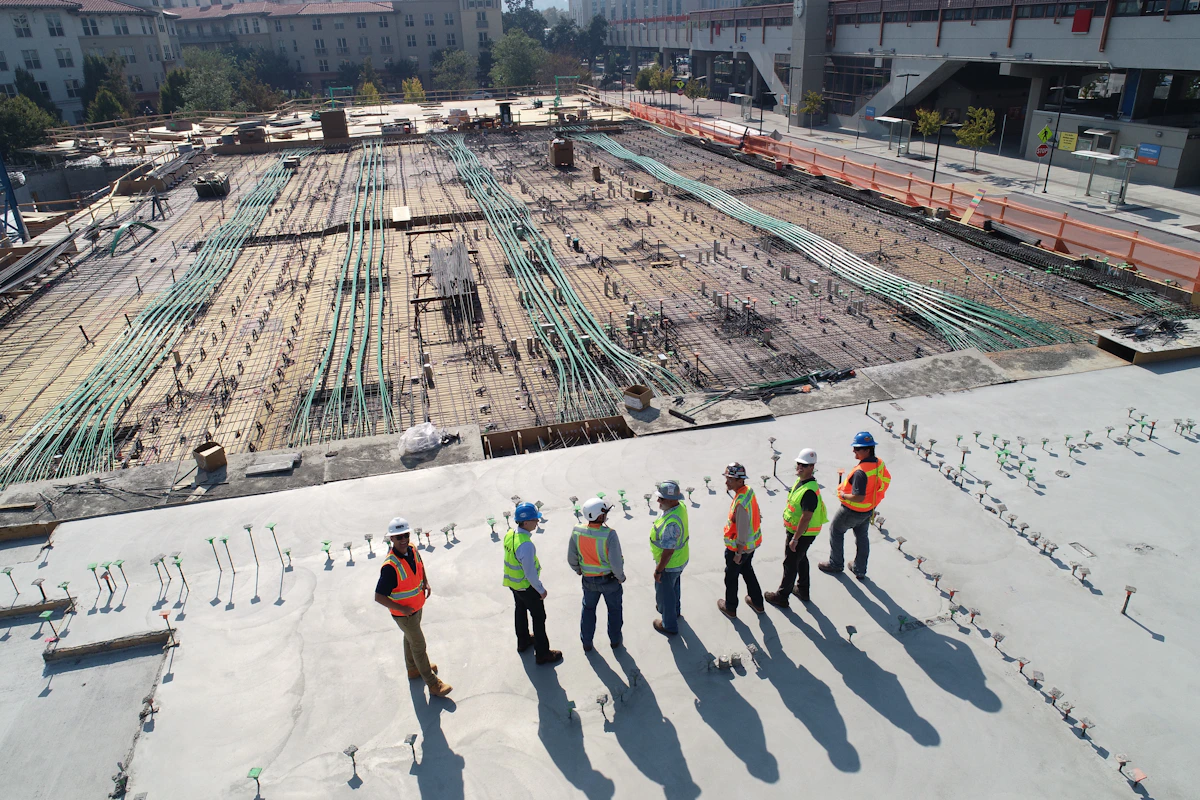
Picture a ₹45 crore IT park in Noida. Three contractors on site simultaneously — civil and structural, MEP, and interior fit-out. The civil contractor completes the slab. The MEP contractor arrives to run conduits and discovers the slab penetrations were not cast in the right positions. The civil contractor says the drawings they received didn't show them. The MEP contractor says they sent revised drawings two weeks ago. The project manager opens three different drawing registers and finds three different revision states.
Work stops. A variation claim is raised. The client is told there will be a three-week delay and an additional cost of ₹18 lakhs. Neither contractor is lying. Neither is wrong in a narrow technical sense. But the building doesn't know that. The building just knows it isn't being built.
This scenario plays out across Delhi NCR every single week. Not because contractors are incompetent — most are not — but because the structure of multi-contractor procurement creates information gaps, coordination voids, and incentive misalignments that no amount of project management overhead can fully close.

The Coordination Gap Nobody Talks About
When a project is split across multiple contractors — a structural firm, an MEP contractor, an interior specialist, a façade vendor — each organisation optimises for its own deliverable. This is rational behaviour. But it creates a structural problem: the interfaces between them belong to no one.
The slab edge detail that MEP needs to penetrate. The ceiling height that interiors assumed would be 3.2m but civil built at 2.95m. The electrical conduit that runs exactly where the HVAC duct needs to go. These are not design errors. They are coordination failures — and they happen because the responsibility for resolving them falls into the gap between contracts.
A typical commercial building has over 200 interface points between structural, civil, MEP, and interior systems. In a multi-contractor model, each of those interfaces requires explicit communication, documented resolution, and mutual sign-off. In practice, perhaps 30% get that treatment. The rest are discovered during construction, when the cost and time of resolution has multiplied by a factor of eight to twelve.
What Single-Point Accountability Actually Means
A single-point accountability model does not mean one person does everything. It means one entity is contractually responsible for everything — and that entity manages all coordination internally. The client has one number to call. One throat to hold. One set of drawings that all disciplines have signed off on before a single column is poured.
At GEC, this means civil, structural, MEP, interiors, and façade work are coordinated under one project director from the design stage. Clashes are resolved in a model, not on site. MEP routes are fixed before concreting begins. The client receives a single programme, a single BOQ, and a single point of escalation.
The practical effect is that every coordination problem the client would otherwise have to mediate becomes our internal problem. We resolve it faster, cheaper, and without involving the client — because we have all the information, all the authority, and all the incentive to resolve it correctly the first time.
The Three Models and Their Hidden Costs
Traditional separate contracts appear to offer price transparency and competitive tension. In theory, the client gets the best specialist for each discipline at the best price. In practice, they also get the coordination burden, the variation disputes, and the blame-shifting when interfaces fail. The "savings" on individual contract values are routinely consumed by coordination overhead, variations, and delay claims.
Design-and-build models partially address this but typically mean the contractor optimises the design for buildability at the expense of the client's original vision. The accountability is better; the design outcome is often a compromise.
A true single-point accountability model — where one contractor takes responsibility for all disciplines, coordinates the design, and is answerable for every interface — eliminates the gap without asking the client to compromise on design intent. It is not a premium. It is the correct structure for any project where quality and time are non-negotiable.
The Cost of Getting This Wrong
Coordination failures are not line items in a project budget until they become variations. A missed MEP penetration discovered post-slab costs 8–12× what it would have cost to coordinate correctly at design stage. A ceiling height conflict discovered during fit-out means either compromising on design or breaking finished work. A façade system clash with the structural frame discovered during installation means waiting for redesign while the entire project idles.
We have costed coordination failures on projects we have taken over mid-stream from multi-contractor arrangements. The average additional cost is 11–14% of contract value. The average additional time is 6–8 weeks. These are not exceptional cases — they are the statistical norm for how multi-contractor projects actually perform versus initial expectation.
Building Certainty Into the Contract
The single-point model does not eliminate complexity. It relocates it — from the client's problem to the contractor's competence. A contractor who can genuinely offer this model has invested in coordination systems, BIM capability, multi-discipline programme management, and the institutional depth to manage it. These are not trivial capabilities. They are the reason the model works when it is offered by the right firm and fails when it is promised by the wrong one.
When you are evaluating a contractor for a major project, the question to ask is not "do you offer single-point accountability?" — most will say yes. The question is: show me the last three projects where you delivered it, and let me speak to the clients. That conversation will tell you everything you need to know.