When a project crosses a certain threshold — in value, in complexity, in consequence — the usual procurement logic breaks down. Price comparison becomes a distraction. The real question is not who will build it cheapest, but who has the institutional depth to build it right.
The Limits of a Bid Comparison
Most bid evaluations compare rates, timelines, and methodology statements. These are useful signals at a smaller scale. But for a ₹50Cr or ₹100Cr project — an IT campus, a logistics hub, a manufacturing facility — they are insufficient. The variables that determine project success at this scale are not visible in a bid document.
A methodology statement is a document. It tells you what the contractor intends to do, written by someone whose job is to win the bid. It cannot tell you whether the site manager has delivered projects of comparable complexity, whether the testing laboratory has the equipment to validate what the methodology promises, or whether the organisation has the financial resilience to maintain quality when cash flow tightens.
How deep is the senior team? Does the project director have experience with projects of comparable complexity, or will yours be their largest commission? What happens when the project manager changes — is there institutional knowledge, or is it all in one person's head? These are the questions that reveal capability. None of them appear in a bid comparison.
Equipment Ownership: The Signal Most Clients Miss
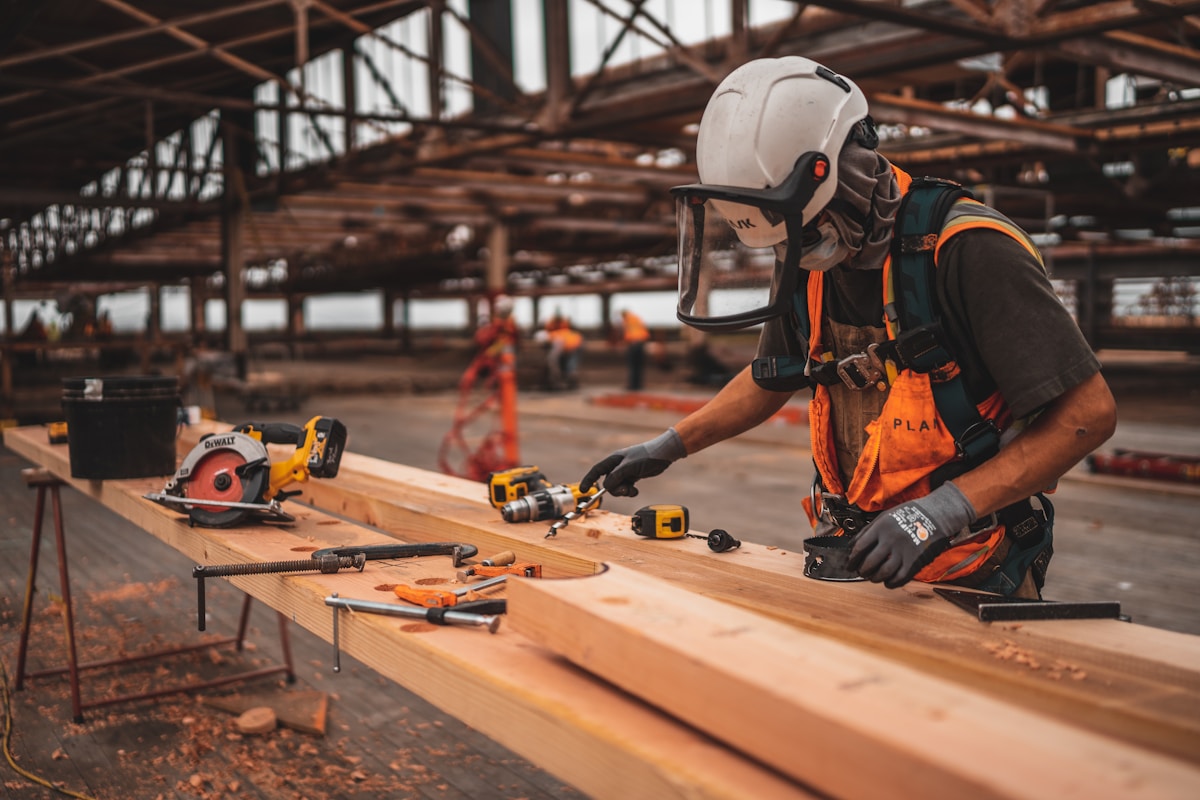
A contractor who rents equipment is a contractor whose programme depends on someone else's availability. When a tower crane is shared across three sites, your project is always at risk of losing it to a more urgent competing demand. When a concrete pump needs servicing and the rental company has no backup, your pour stops — regardless of what the programme says.
Equipment ownership is not a balance sheet metric — it is a programme security metric. A contractor who owns their batching plant, their cranes, their compaction equipment, and their concrete pumps controls their own programme. They are not at the mercy of third-party availability, third-party maintenance schedules, or third-party commercial priorities.
When you are awarding a ₹100Cr project, ask for a list of owned plant and equipment. Ask when it was last serviced and by whom. Ask what backup capacity exists for each critical piece of equipment. The answers will tell you more about programme reliability than any Gantt chart in the bid submission.
Financial Stability and the Long Game
A contractor under financial stress makes decisions that are bad for your project. Material procurement gets delayed because the cash isn't there to pre-order. Subcontractor payments get stretched until the subcontractors stop showing up. Quality checks get compressed because the pressure to complete and certify the next milestone is overwhelming every other consideration.
A financially stable contractor with healthy cash flow makes decisions on merit — not survival. They order materials on the right schedule, not when they can afford to. They pay subcontractors promptly, which means subcontractors keep working. They can absorb a delayed payment certificate from the client without cascading the problem down the supply chain.
Ask for audited financials. Ask for banker references. Ask how they funded their last three projects. Ask whether they have a dedicated project account with ring-fenced cash for your project. These are standard questions in institutional procurement and they are absolutely reasonable for any project above ₹10Cr.
The Reference Conversation
The most underused tool in construction procurement is the reference check. Not the curated letter from a satisfied client — the direct phone call to the project director of a completed project, without the contractor present. That conversation will tell you in three minutes what no amount of document review can.
Ask: were there surprises, and how were they handled? Was the contractor proactive or reactive? When problems arose, did they tell you immediately or did you find out when it was already expensive? Would you use them again for a project of the same scale — and if you're hesitating before answering, why?
A contractor confident in their track record will give you the reference without hesitation. A contractor who offers you only written testimonials, or who suggests references only from completed-but-not-comparable projects, is telling you something by what they won't show you.
Culture Is the Differentiator
At a certain project scale, the contractor's culture becomes the client's culture on site. A contractor with a culture of proactive communication catches problems early and tells you immediately. A contractor with a culture of concealment discovers problems late and tells you never. By the time you find out, the cost of resolution has multiplied.
Culture is visible on site. Walk an active project unannounced. Look at how supervisors interact with workers. Look at whether safety equipment is worn or merely available. Look at whether drawings are current and accessible at the point of work. Look at the site office — is it organised or chaotic? The site tells you everything about the culture. The bid tells you nothing.
The right contractor for a landmark project is one who treats your success as their reputation. Not because it is in the contract — because it is in their character. That distinction is the one that matters most when you are making the most consequential procurement decision of your project.