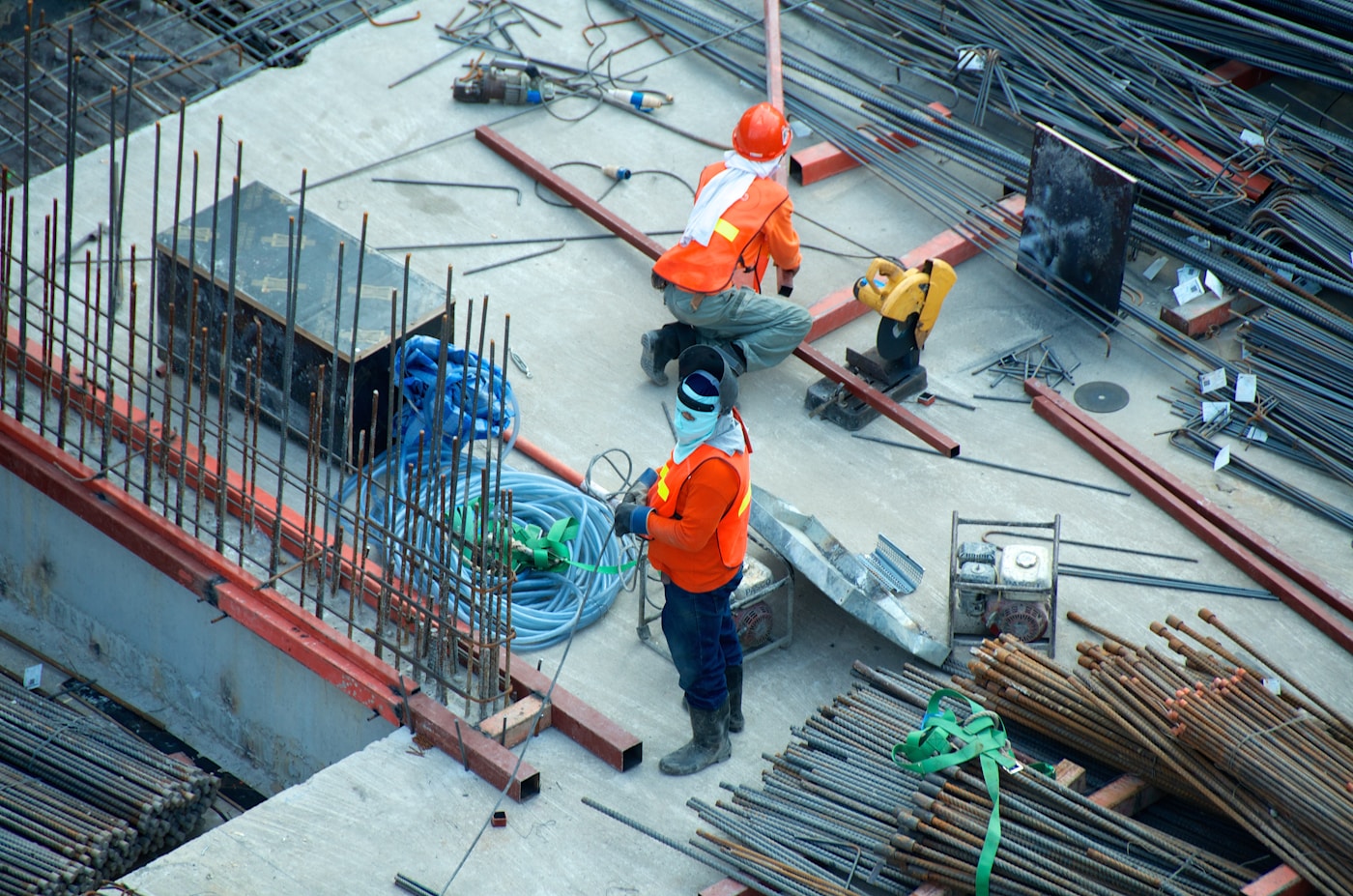
The Indian construction industry lost approximately 45 million man-days of skilled site labour between 2020 and 2022. Some of that came back. A significant portion did not — workers who returned to their home states and found alternatives did not return to construction sites. The labour availability assumption that underpinned Indian construction economics for three decades has permanently changed, and prefabrication is one of the structural responses.
What is actually driving adoption now
Three things are different in the 2024–26 period compared with previous prefab cycles. First, the PLI (Production Linked Incentive) scheme has seeded domestic manufacturing capacity in structural steel, precast concrete, and building products — reducing the import dependency that previously made prefab components uncompetitive on cost. Second, the industrial and warehousing boom driven by e-commerce and PLI-scheme manufacturing has created high-volume, repetitive construction demand that is the natural fit for prefab methodology. Third, organised real estate developers — facing pressure on delivery timelines, quality consistency, and ESG metrics — are increasingly mandating prefab components for repetitive floor plates in residential towers.
Where prefab works in India — and where it does not
Prefabrication is not universally appropriate, and the market often overstates its advantages. It works best in three scenarios: high-volume repetitive structures (warehouses, affordable housing blocks, data centres, institutional dormitories), projects with constrained site access where cast-in-situ operations create logistics problems, and projects with aggressive programme requirements where the factory-to-site supply chain can be reliably managed. It works poorly in highly customised, irregular structures; in projects with unstable design briefs where factory orders cannot be locked; and in locations where transport logistics add significant cost and programme risk to component delivery.
The design freeze problem
The single most common failure mode in first-time prefab projects is design change after factory order. Precast and modular components are manufactured to precise tolerances and cannot be modified after casting. A column section change, a slab penetration added late, a façade bracket repositioned by a consultant — any of these, in a conventional project, costs a few thousand rupees in rework. In a precast programme, it can mean scrapping manufactured units, re-ordering, and losing six weeks. The prerequisite for prefab delivery is design resolution at a level of detail that most Indian projects do not achieve until well into the construction phase. This requires front-loaded design investment and a client willing to freeze decisions before they normally would.
The quality argument
Factory production consistently outperforms site production on dimensional accuracy, concrete quality, and finish — these are simply controlled environment advantages. On a precast frame, slab levels are achievable to ±3mm rather than the ±10–15mm typical of conventional slab work. This matters enormously for raised floor systems, curtain wall installation, and MEP coordination. However, the quality advantage is only realised if the interface between precast and in-situ elements is properly designed and executed. Connection zones — the grouted joint between a precast column and an in-situ pile cap, the cast-in ferrule connecting a precast beam to a precast column — are the critical quality control points. The factory controls the component quality. The site controls the connection quality. Both matter equally.
Prefabrication is not a panacea and it is not a trend. It is a delivery methodology with specific advantages and specific prerequisites. The developers and contractors who will benefit from it are those who invest in understanding those prerequisites — and redesign their procurement, design, and site management processes accordingly. For the right project, correctly procured, the gains in programme, quality consistency, and labour efficiency are substantial and real.