We started GEC in 2002 with a single conviction: that the gap between what a building was designed to be and what it was actually built to be was a problem worth dedicating a career to solving. Thirty-five years in the field later, that conviction has not changed. What has changed — profoundly — is our understanding of what quality actually requires.
The First Lesson: Quality Is a Decision, Not a Specification
Early in our practice, we believed that quality came from good specifications — the right grade of concrete, the right steel, the right waterproofing membrane. We wrote detailed specs. We audited material deliveries. We checked certificates. We believed we were managing quality.
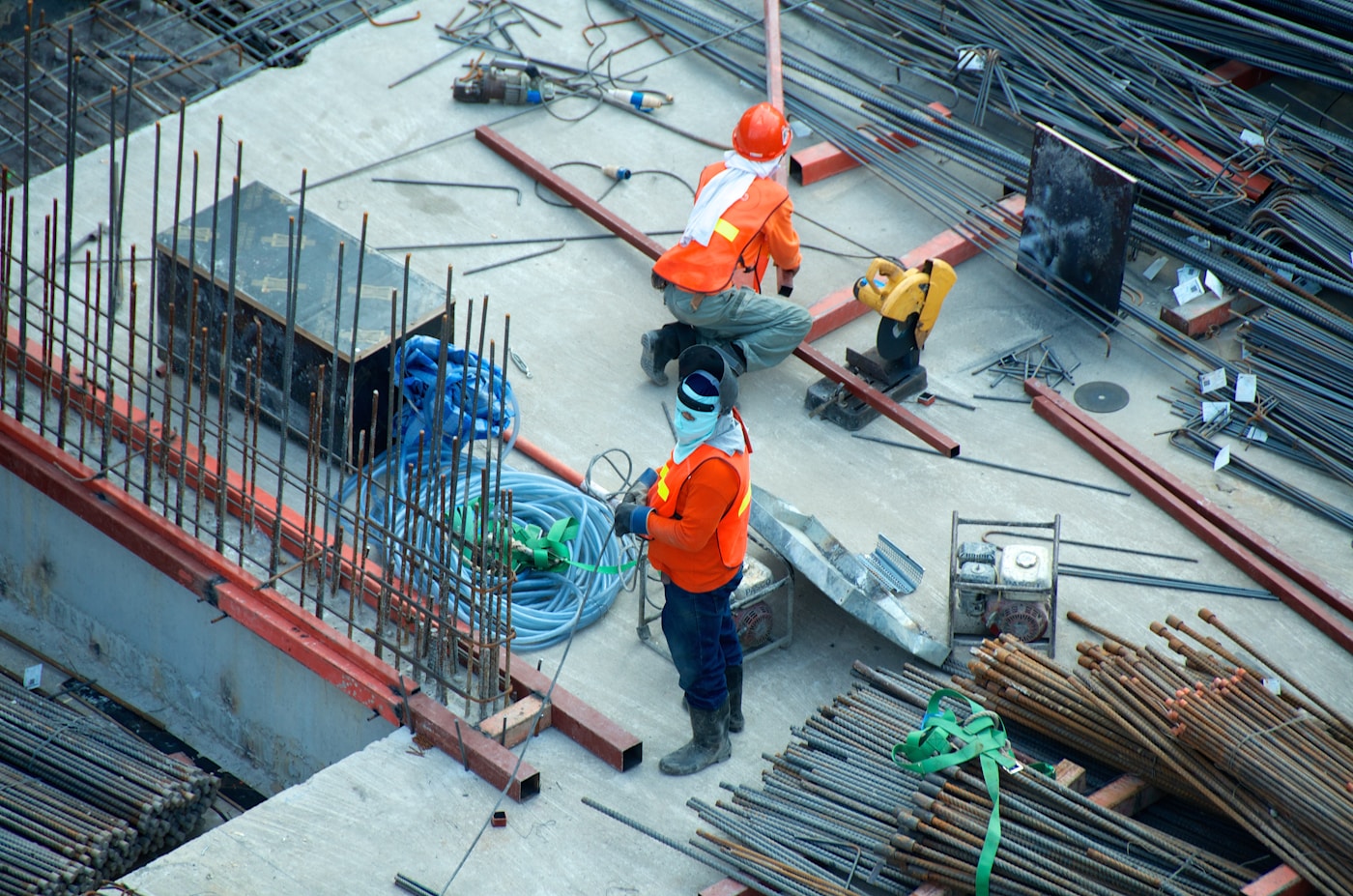
Then we watched a foreman on one of our early projects make forty decisions in a single morning — the cover distance on a rebar, the cure time before formwork strike, the compaction of a backfill layer, the mix consistency of a mortar batch. None of these decisions were explicitly addressed in our specification. All of them affected the quality of the finished structure. The foreman made them based on his judgement, his training, and the culture of the team around him. Quality, we understood, is not a document. It is a culture.
The practical implication was uncomfortable: you cannot specify your way to quality. You can specify inputs and outputs, but the transformation between them — the thousands of micro-decisions that happen between design and handover — is determined by whether the people making them care about the outcome. That is a selection and culture problem, not a specification problem.
The Second Lesson: Testing Is Evidence, Not Prevention
For a long time, the industry equated quality assurance with testing. Cube tests. Compaction tests. Weld inspection. Pull-out tests. These matter — but they are measures of quality, not causes of it. By the time a cube test fails, the concrete has already been poured. By the time a weld fails inspection, the structure is already up. Testing identifies failure. Prevention is the discipline that eliminates it.
Real quality assurance happens upstream: in the selection and pre-approval of materials suppliers, in the briefing of site supervisors before each major activity, in the hold points built into the programme where no work proceeds without written sign-off. Testing becomes the final verification of a process that was designed to produce the right result — not the rescue mechanism for a process that wasn't.
This distinction changed how we built our QA systems. We moved from "test and respond" to "brief, hold, test, release." Every pour has a pre-pour inspection. Every structural frame has a pre-cover inspection. Every waterproofing application has a flood test before it is buried. The tests became the concluding step in a sequence — not the beginning of a response.
The Third Lesson: The Client Feels What You Cannot See
The most sophisticated clients — the ones who have commissioned many buildings — walk a project and sense the quality before they can articulate it. The level of a floor. The plumb of a wall. The tolerance of a door frame. The alignment of tiles. The finish of a concrete column. These are not items on a snagging list. They are the accumulated effect of whether the site team cared about precision or just completion.
After fifteen years, we understood that the quality of a building is legible in a way that clients feel even when they cannot precisely measure it. A premium project client knows, walking through their new building, whether it was built by people who cared. That knowledge cannot be faked. It cannot be achieved through post-handover remediation. It has to be built in — decision by decision, from the first day on site.
This shaped everything about how we hire, brief, and retain our site team. The site manager on a GEC project is selected partly for technical competence and partly for something harder to measure — the disposition to care. To notice the thing that is slightly out of tolerance and fix it without being asked. To hold the team to a standard even under time pressure. To treat every surface as if the client is about to inspect it.
The Fourth Lesson: Speed and Quality Are the Same Goal
We have never believed in the false choice between speed and quality. The fastest way to build a project is to build it right the first time. Rework is the most expensive activity on any site — in time, in material, in morale. A team that builds something correctly in four days spends zero days on rework. A team that builds something quickly in three days and spends two days fixing it has lost time and wasted material and damaged the confidence of the client.
A culture of quality is also, always, a culture of efficiency. The disciplines are the same: planning ahead, doing the work correctly, catching problems early, maintaining systems and processes. The teams that take the most pride in quality are consistently the most productive. The teams that cut corners to meet a milestone consistently lose more time in rework than they gained in the cutting.
What Thirty-Five Years Actually Looks Like
In our early years, we built with slide rules and hand-drawn schedules. Today we use BIM coordination, digital quality registers, and real-time site monitoring. The tools have changed beyond recognition. The principle has not moved an inch: every building we build is someone's most significant investment, designed to outlast us both, and it deserves to be built as if we knew that.
Zero structural defect claims in thirty-five years is not luck. It is not even primarily the result of good specifications or advanced testing. It is the result of a culture that was decided upon at the beginning and defended every single day since — on every site, by every team, regardless of schedule pressure or budget pressure or client pressure. That is the only quality management system that actually works.